Intermediate · Technical intensive · DOC-OT-07

Access & Control

Physical Perimeter, Out-of-Band & Operational Technology (OT) Security

Protect physical white/gray-space access, out-of-band management networks, and BMS/EPMS industrial controllers without accidentally blinding operators or tripping live equipment.

Start Lesson 1 (~15 min open)
Open sample & effort
All 5 browser lessons & capstone open free (~77 min reading; no login).
Prerequisites
The Critical Floor and Signal Room, or working familiarity with BMS/EPMS networks, physical access control, or IT networking. Designed for: Physical & OT security specialists, BMS/EPMS controls engineers, IT/out-of-band network technicians, and shift leads.
Tuition & cohort enquiry ($399 · $1,600 list)

Course outline · 5 open browser lessons (~77 min reading)

  1. 01Physical security rings and OT asset inventory~15 min read
  2. 02Remote vendor access, jump hosts, and field media hygiene~16 min read
  3. 03Purdue segmentation and out-of-band boundaries~15 min read
  4. 04Firmware patching, reboot risk, and configuration hashes~15 min read
  5. 05Joint OT cyber-physical incident tabletop~16 min read

Plus 1 unmeasured end-of-course capstone check and self-paced DOC-OT-07 deliverable rubric in the open studio below.

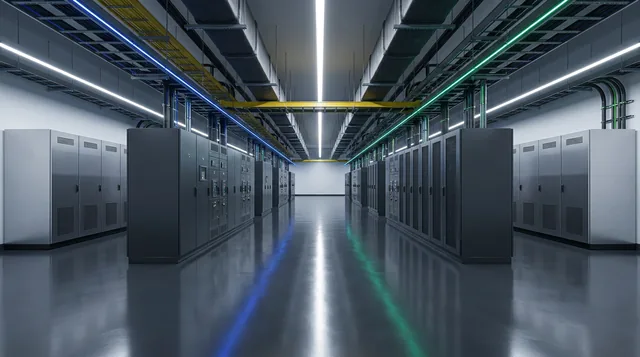
Segmented critical power and PLC switchgear gallery inside a modern data center
FIG. 01 · DOC-OT-07Physical Perimeter, Out-of-Band & Operational Technology (OT) Security
Prerequisites
The Critical Floor and Signal Room, or working familiarity with BMS/EPMS networks, physical access control, or IT networking. Designed for: Physical & OT security specialists, BMS/EPMS controls engineers, IT/out-of-band network technicians, and shift leads.
Study scope
Open now: ~77 min approximate reading across 5 interactive browser lessons (15 to 16 min each). Self-paced & unmeasured: end-of-course capstone check, paired Campus Shift exercise, and drafting your DOC-OT-07 deliverable. Extended cohort scope: 6 hours extended syllabus & project scope.
Deliverable
Portfolio deliverable: A physical-to-OT access boundary review with vendor supervision safeguards and manual fallback plan. (DOC-OT-07)
Tuition & enquiry
$399 self-paced tuition ($1,600 list). All 5 lessons below are already open free; submitting the enquiry form records your email for manual follow-up with no online card checkout or gated account login.
Progress & terms
6/6 lesson and capstone checks save in this browser (localStorage with session fallback). Independent professional-development training, not an accredited certificate/degree, trade license, vendor credential, or live-site switching authorization.
Paired Campus Shift station
OT Jump-Host & Relay Cabinet (free interactive Campus Shift in browser)
Recommended next course
Resource Ledger: Complement operational security and control-plane governance with rigorous energy, water, and capacity accounting.
Scope note & primary engineering references (3 cited)

Open browser lessons total ~77 min approximate reading across 5 modules; the end-of-course capstone check, paired Campus Shift exercise, and self-paced DOC-OT-07 deliverable draft are separate unmeasured practice outside the extended cohort scope (6 hours extended syllabus & project scope).

  • NIST SP 800-82 Rev. 3 (Guide to Operational Technology Security: safety/availability precedence, IDMZ jump hosts, and OT patching)
  • ISA/IEC 62443 Series (Security for Industrial Automation and Control Systems: Zones, Conduits, and Security Levels)
  • Purdue Enterprise Reference Architecture (Levels 0 through 5 physical-to-enterprise network separation)

Interactive self-paced studio

Study Access & Control right now, at your own pace.

Self-paced progress · 0/6 checkpoints verified
Lesson 1 of 5 · ~15 min studio (70 min syllabus scope)

Physical security rings and OT asset inventory

Key terms defined in plain language first
OT vs IT Priority Order

Enterprise IT prioritizes Confidentiality, Integrity, Availability (CIA); industrial OT prioritizes Physical Safety first, then Availability and Integrity, then Confidentiality ( per NIST SP 800-82).

An automated security script that locks out an operator console during a switchgear fault creates an immediate physical hazard.
Purdue Levels (0 to 4)

A layered map of control networks: Level 0 (sensors/actuators), Level 1 (PLCs/protective relays), Level 2 (local HMIs/BMS supervisory), Level 3/3.5 (historians & Industrial DMZ buffer), Level 4 (corporate IT).

Never plug a Level 4 corporate laptop or internet cable straight into a Level 1 switchgear or chiller PLC switch!
Shadow OT Backdoor

An undocumented LTE/5G cellular router, Wi-Fi bridge, or dual-homed NIC installed inside an OEM skid (like a chiller or generator) for 'vendor cloud telemetry.'

Bypasses every site firewall and Industrial DMZ control unless discovered during walkdown/commissioning.Encyclopedia: Shadow OT Backdoors (Rogue Cellular Modems) and Passive OT Asset Discovery
Field engineering briefing

Corporate IT security optimizes for Confidentiality first (protecting customer data from exfiltration), whereas Operational Technology (OT) and physical access control inside electrical and chiller galleries must protect Physical Safety and Availability alongside security. Defending that boundary starts by linking physical security rings (badge/biometric mantraps, Meet-Me Rooms, cabinet locks, and gray-space panel keys) directly to every PLC, protective relay, BMS gateway, and hidden cellular modem on the floor.

Linking badge/biometric mantraps, cabinet locks, meet-me rooms, and gray-space panels to PLCs, relays, and gateways.

Walking physical security rings and cabinets to build a real OT inventory

Network scanners alone miss serial TIA/EIA-485 Modbus trunks and should never be run aggressively against fragile legacy PLCs (where malformed packets can crash a controller stack). A reliable OT asset register pairs passive traffic observation with physical security and cabinet inspections: verifying mantrap and gray-space door access lists, locked PLC enclosures, firmware versions, unused open RJ45 switch ports, and any unauthorized cellular antennas on OEM skids.

Mapping trust boundaries where wires cross rooms

Every cable leaving an electrical or mechanical gallery, whether feeding a corporate DCIM dashboard, a cloud chiller analytics portal, or a tenant power-metering API, is a trust-boundary crossing that must be documented with its protocol, direction, and owner.

System state-change diagram

Purdue OT Hierarchy: Clean IDMZ Path vs Shadow Cellular Bypass

Viewing: 2. Trigger: Level 3.5: Industrial DMZ Buffer
Swipe sideways on narrow screens · Node values below
Levels 0 to 1 (Field& PLCs)Closed-loop real-timecontrolLevels 2 to 3 (BMS /EPMS)Isolated OT VLANsLevel 3.5 (IndustrialDMZ)Terminates IT/OTsessionsShadow OT HazardCheckFound SIM cellularrouter!
  1. 1. Levels 0 to 1 (Field & PLCs)Closed-loop real-time control
  2. 2. Levels 2 to 3 (BMS / EPMS)Isolated OT VLANs
  3. 3. Level 3.5 (Industrial DMZ)Terminates IT/OT sessions
  4. 4. Shadow OT Hazard CheckFound SIM cellular router!

Compare telemetry flowing safely through an Industrial DMZ broker against an undocumented OEM cellular modem bypassing all firewalls.

Accessible text walkthrough & 3-state comparison table

Levels 0 to 1 PLCs and Levels 2 to 3 BMS/EPMS servers sit behind a Level 3.5 Industrial DMZ so corporate Level 4 networks never connect directly; physical cabinet inspection catches and removes an undocumented OEM cellular SIM router.

System node1. Level 1: Chiller / Relay PLCs2. Level 3.5: Industrial DMZ Buffer3. Audit Catches Shadow LTE Modem
Levels 0 to 1 (Field & PLCs)Protective relays & chiller PLCsClosed-loop real-time controlZero direct internet routing
Levels 2 to 3 (BMS / EPMS)Control room HMIs & historiansIsolated OT VLANsOperator local control intact
Level 3.5 (Industrial DMZ)Bastion jump host + brokerTerminates IT/OT sessionsNo flat L4-to-L1 bridge
Shadow OT Hazard CheckOEM skid cabinet auditFound SIM cellular router!Disconnected under change ticket

Levels 0 to 1 PLCs and Levels 2 to 3 BMS/EPMS servers sit behind a Level 3.5 Industrial DMZ so corporate Level 4 networks never connect directly; physical cabinet inspection catches and removes an undocumented OEM cellular SIM router.

  • Levels 0 to 1 (Field & PLCs): Level 1: Chiller / Relay PLCs = Protective relays & chiller PLCs; Level 3.5: Industrial DMZ Buffer = Closed-loop real-time control; Audit Catches Shadow LTE Modem = Zero direct internet routing.
  • Levels 2 to 3 (BMS / EPMS): Level 1: Chiller / Relay PLCs = Control room HMIs & historians; Level 3.5: Industrial DMZ Buffer = Isolated OT VLANs; Audit Catches Shadow LTE Modem = Operator local control intact.
  • Level 3.5 (Industrial DMZ): Level 1: Chiller / Relay PLCs = Bastion jump host + broker; Level 3.5: Industrial DMZ Buffer = Terminates IT/OT sessions; Audit Catches Shadow LTE Modem = No flat L4-to-L1 bridge.
  • Shadow OT Hazard Check: Level 1: Chiller / Relay PLCs = OEM skid cabinet audit; Level 3.5: Industrial DMZ Buffer = Found SIM cellular router!; Audit Catches Shadow LTE Modem = Disconnected under change ticket.
Worked engineering example

Auditing a new four-chiller skid delivery for undocumented OT paths

Given scenario

Illustrative commissioning audit: Four air-cooled chillers arrive with factory control panels (8 Ethernet ports per local unmanaged switch = 32 ports total). OEM documentation mentions 'SmartCloud Predictive Diagnostics' included free for year one.

  1. Step 1

    Trace physical ports and radios across all 4 skids: 4 ports per skid connect internal VFD/expansion boards (16 ports); 1 port per skid uplinks to site BMS BACnet VLAN (4 ports); 1 port on Chiller 1 connects to a DIN-rail 4G LTE modem wired to a magnetic roof antenna. Remaining 11 RJ45 ports sit open and enabled.

  2. Step 2

    Quantify and close attack surface: Disable/physically cap or MAC-lock the 11 unused switch ports (reducing open physical plug-in ports from 11 to 0), and physically disconnect/de-power the unapproved 4G LTE modem under OEM commissioning redline.

  3. Step 3

    Provide approved alternative: Route any required OEM diagnostic data outbound-only (read-only) via the site's Level 3.5 IDMZ telemetry broker rather than a direct cellular bridge into Level 1 chiller PLCs.

Operational takeaway: 'Free cloud diagnostics' on a mechanical skid frequently hides a live two-way cellular modem wired straight into your Level 1 control bus.
Optional depth · Scope boundaries & modeling assumptions

Scope & assumptions: Port-security methods (physical RJ45 port blockers on unmanaged switches vs 802.1X/port-shutdown on managed industrial switches) depend on OEM panel hardware.

Optional reference table · DOC-OT-07: OT Asset & Trust-Boundary Inventory Row

Establishes the physical-to-network asset baseline for the DOC-OT-07 access review.

FieldIllustrative entryVerification rule
Level 1 Critical Control AssetsSwitchgear ANSI relays, UPS controllers, Chiller/CDU PLCs (firmware & checksum logged).Passive inventory only; zero active Nmap/vulnerability fuzzing on live control buses.
OEM Skid Radio / Modem CheckInspected DIN rails & enclosures; 0 cellular SIM routers or Wi-Fi APs active.Verify during L2 receiving/commissioning before energizing control transformers.
Physical Port HygieneUnused RJ45 switch ports administratively shut down + physical port locks installed.Re-verify port locks after every vendor service visit.
Operator field checklist (check off as you review)
Graded checkpoint · Counts toward 6/6Module 1 of 5 verification

How should you handle a vendor request to bridge a personal cellular hotspot directly into a live chiller PLC cabinet?

During an urgent chiller capacity advisory, an OEM chiller specialist on site asks to plug their personal LTE cellular hotspot router directly into Chiller Cabinet B's PLC switch for 'ten minutes so factory engineering can check live registers quickly.'

Lesson 1 of 5 · Open browser studio

Capabilities

What you will verify on shift.

  • Connect physical access control rings (perimeter, mantrap, hall, cage, cabinet, gray-space switchgear) to OT cyber risk
  • Map PLCs, protective relays, BMS controllers, out-of-band serial consoles, and Purdue Level 3.5 DMZ jump hosts
  • Supervise remote and on-site vendor sessions with least privilege, session recording, and pre/post configuration hashes
  • Keep critical power and cooling running safely from local HMI panels if management networks must be isolated

Portfolio Deliverable · DOC-OT-07

What you build and keep.

A physical-to-OT access boundary review with vendor supervision safeguards and manual fallback plan.

  • Physical perimeter to Purdue Levels 0 to 3.5 BMS/EPMS zone and out-of-band network map
  • Time-boxed vendor jump-host, transient laptop/USB scan, and PLC checksum checklist
  • Joint Facilities + Physical Security + InfoSec incident isolation & manual-operation protocol

Recommended Next Course

Resource Ledger

Complement operational security and control-plane governance with rigorous energy, water, and capacity accounting.

Optional tuition-rate enquiry · Separate from the free open browser studio above (no payment card, checkout, or automated credential on this page)

Tuition & cohort enquiry

Reserve Access & Control ($399 tuition).

Reserve the $399 self-paced tuition rate ($1,600 list price). All published interactive studio modules on this page are open in your browser right now; submitting sends your rate inquiry for manual email follow-up with no automated billing or gated account creation here.

Intermediate · ~77 min open lessons · 6 hours extended syllabus & project scope$1,600$399
Access & Control: Physical Perimeter, Out-of-Band & Operational Technology (OT) Security

Portfolio deliverable: A physical-to-OT access boundary review with vendor supervision safeguards and manual fallback plan.

Selected self-paced courseAccess & Control (Intermediate) · $1,600 $399

No card or automated billing here · Sends a $399 rate inquiry ($1,600 list) on submit · Open browser studio above.