Intermediate · Core pathway · DOC-MOP-04

Runbook Under Pressure

Operating, Maintenance & Emergency Procedures (SOP/MOP/EOP) & Incident Response

Practice disciplined operational judgment when switching MOPs, commissioning scripts, live system state, and maintenance-window clock pressure collide.

Start Lesson 1 (~16 min open)
Open sample & effort
All 5 browser lessons & capstone open free (~82 min reading; no login).
Prerequisites
Utility to Rack and Thermal Reality, or active critical-facility floor experience. Designed for: Shift operators, facility technicians, commissioning engineers, and critical electrical/mechanical specialists.
Tuition & cohort enquiry ($399 · $1,600 list)

Course outline · 5 open browser lessons (~82 min reading)

  1. 01Procedure architecture, LOTO, and human factors~16 min read
  2. 02MOP pre-mortem redlining and IST commissioning gates~18 min read
  3. 03Executing hold points and EOPs under uncertainty~16 min read
  4. 04Two-way readbacks, escalation, and shift handover~16 min read
  5. 05Blameless debriefs and procedure hardening~16 min read

Plus 1 unmeasured end-of-course capstone check and self-paced DOC-MOP-04 deliverable rubric in the open studio below.

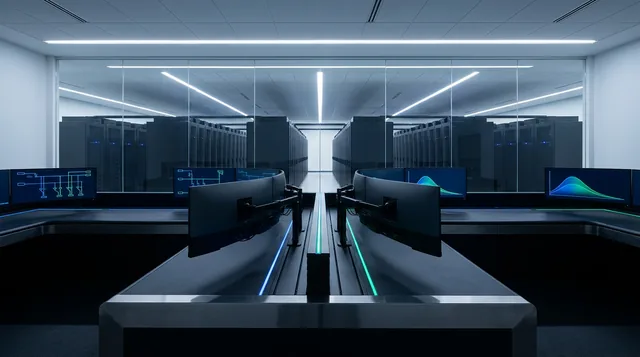
Data center shift command glass suite overlooking a liquid-cooled server corridor
FIG. 01 · DOC-MOP-04Operating, Maintenance & Emergency Procedures (SOP/MOP/EOP) & Incident Response
Prerequisites
Utility to Rack and Thermal Reality, or active critical-facility floor experience. Designed for: Shift operators, facility technicians, commissioning engineers, and critical electrical/mechanical specialists.
Study scope
Open now: ~82 min approximate reading across 5 interactive browser lessons (16 to 18 min each). Self-paced & unmeasured: end-of-course capstone check, paired Campus Shift exercise, and drafting your DOC-MOP-04 deliverable. Extended cohort scope: 8 hours extended syllabus & project scope.
Deliverable
Portfolio deliverable: A pre-window redlined MOP and a time-stamped incident/backout handover record. (DOC-MOP-04)
Tuition & enquiry
$399 self-paced tuition ($1,600 list). All 5 lessons below are already open free; submitting the enquiry form records your email for manual follow-up with no online card checkout or gated account login.
Progress & terms
6/6 lesson and capstone checks save in this browser (localStorage with session fallback). Independent professional-development training, not an accredited certificate/degree, trade license, vendor credential, or live-site switching authorization.
Paired Campus Shift mission
Zero-Downtime 2N UPS Wrap-Around MOP (free interactive Campus Shift in browser)
Recommended next course
Access & Control: Extend physical switching and work-control discipline to vendor jump-hosts, PLC firmware changes, and OT security boundaries.
Scope note & primary engineering references (3 cited)

Open browser lessons total ~82 min approximate reading across 5 modules; the end-of-course capstone check, paired Campus Shift exercise, and self-paced DOC-MOP-04 deliverable draft are separate unmeasured practice outside the extended cohort scope (8 hours extended syllabus & project scope).

  • Uptime Institute Annual Outage Analysis (human-error taxonomy: procedure omissions vs failure to follow procedure)
  • DOE Standard 1028 / Human Performance Improvement (HPI) principles (two-person reader-doer verification, placekeeping, and stop-work gates)
  • NFPA 70E & OSHA 1910.147 (energized switching boundaries and hazardous energy LOTO verification)

Interactive self-paced studio

Study Runbook Under Pressure right now, at your own pace.

Self-paced progress · 0/6 checkpoints verified
Lesson 1 of 5 · ~16 min studio (90 min syllabus scope)

Procedure architecture, LOTO, and human factors

Key terms defined in plain language first
SOP vs MOP vs EOP

Standard Operating Procedures (SOPs) cover routine daily tasks (rounds, water sampling); Methods of Procedure (MOPs) script step-by-step planned maintenance switching; Emergency Operating Procedures (EOPs) govern immediate stabilization during abnormal faults.

Never improvise energized switching off an informal SOP, and transition immediately from an MOP to an EOP if an unplanned fault strikes.
Two-Person Reader-Doer (Point-and-Read)

One qualified operator reads each numbered step aloud and verifies the physical cabinet nameplate while the second operator points to the exact device, repeats its tag, and awaits confirmation before actuating.

Prevents 'adjacent-cabinet error', such as flipping Breaker 52-A2 instead of identical-looking 52-B2 at 02:30 AM.Encyclopedia: Two-Person Reader-Doer Execution and Circle-and-Slash Placekeeping
Circle-and-Slash Placekeeping

Physically circling a step number when starting it and drawing a slash through the circle only after its expected meter response is verified.

Stops radio interruptions from causing a crew to skip Step 9 or execute Step 8 twice.Encyclopedia: Two-Person Reader-Doer Execution and Circle-and-Slash Placekeeping
Field engineering briefing

Industry outage studies repeatedly show that most human-related outages happen either because a procedure was flawed/incomplete or because tired people skipped a verification step under schedule pressure. Knowing the distinct job of an SOP, an MOP, and an EOP, and using two-person reader-doer discipline, protects good technicians from predictable human cognitive traps.

How SOPs, MOPs, EOPs, and LOTO boundaries differ, two-person check-and-execute rules, and night-shift fatigue traps.

Matching the document to the plant state

Procedures are engineered risk controls, not paperwork formalities. An MOP includes asset-specific preconditions, customer change-window bounds, numbered switching steps, quantitative hold points, and a tested backout sequence, whereas an EOP prioritizes fast, pre-approved diagnostic and load-preservation actions without needing a three-day change-board signature.

Designing against 03:00 AM fatigue and confirmation bias

Maintenance windows are commonly scheduled overnight precisely when human circadian alertness hits its lowest trough (roughly 02:00 to 05:00 local time). Reader-doer verification, phonetic readbacks ('Bravo-Two, not D-Two'), and physical placekeeping act as external guardrails when human short-term memory is most vulnerable.

System state-change diagram

Two-Person Point-and-Read Verification Gate in Switchgear Gallery

Viewing: 2. Trigger: Doer Points to Stencil '52-1B' vs '52-B1'
Swipe sideways on narrow screens · Node values below
Reader (MOP Binder)Compares spokenreadbackDoer (At BreakerFace)Points: 'Placard reads52-1B'Placekeeping SheetStep 11 held openCritical Load BusUntouched duringmismatch
  1. 1. Reader (MOP Binder)Compares spoken readback
  2. 2. Doer (At Breaker Face)Points: 'Placard reads 52-1B'
  3. 3. Placekeeping SheetStep 11 held open
  4. 4. Critical Load BusUntouched during mismatch

Trace how independent reader-doer verification catches a reversed cabinet label before any breaker moves.

Accessible text walkthrough & 3-state comparison table

Reader states Step 11 ('Open 52-B1'); Doer points without touching and reads physical placard ('52-1B'); mismatch triggers an immediate zero-contact halt, keeping the 2N critical load bus untouched while engineering reconciles the label.

System node1. Step 11 Read Aloud2. Doer Points to Stencil '52-1B' vs '52-B1'3. Zero-Contact Halt & Redline Request
Reader (MOP Binder)Reads Step 11: Open 52-B1Compares spoken readbackCalls STOP on tag mismatch
Doer (At Breaker Face)Hands behind back / at sidePoints: 'Placard reads 52-1B'Zero actuation · Safe bus
Placekeeping SheetStep 10 circled & slashedStep 11 held openTimestamped pause logged
Critical Load BusProtected 2N onlineUntouched during mismatch100% continuity preserved

Reader states Step 11 ('Open 52-B1'); Doer points without touching and reads physical placard ('52-1B'); mismatch triggers an immediate zero-contact halt, keeping the 2N critical load bus untouched while engineering reconciles the label.

  • Reader (MOP Binder): Step 11 Read Aloud = Reads Step 11: Open 52-B1; Doer Points to Stencil '52-1B' vs '52-B1' = Compares spoken readback; Zero-Contact Halt & Redline Request = Calls STOP on tag mismatch.
  • Doer (At Breaker Face): Step 11 Read Aloud = Hands behind back / at side; Doer Points to Stencil '52-1B' vs '52-B1' = Points: 'Placard reads 52-1B'; Zero-Contact Halt & Redline Request = Zero actuation · Safe bus.
  • Placekeeping Sheet: Step 11 Read Aloud = Step 10 circled & slashed; Doer Points to Stencil '52-1B' vs '52-B1' = Step 11 held open; Zero-Contact Halt & Redline Request = Timestamped pause logged.
  • Critical Load Bus: Step 11 Read Aloud = Protected 2N online; Doer Points to Stencil '52-1B' vs '52-B1' = Untouched during mismatch; Zero-Contact Halt & Redline Request = 100% continuity preserved.
Worked engineering example

Timing a 4-hour maintenance window with buffer and backout margin

Given scenario

Illustrative window budget: Customer approved a 240-minute (00:00 to 04:00) maintenance window for MOP-312 (UPS-B capacitor inspection). Forward switching takes 35 min, LOTO & capacitor discharge wait takes 15 min, physical inspection takes 90 min, restoration switching takes 40 min, and full backout from mid-procedure takes 45 min.

  1. Step 1

    Sum planned forward-to-restoration execution time with units: T_plan = 35 min + 15 min + 90 min + 40 min = 180 minutes (leaving 60 minutes buffer inside the 240-minute window).

  2. Step 2

    Calculate the hard 'No-Later-Than Backout Clock': Window closes at 04:00; backout/restoration requires 45 minutes. Therefore, 04:00 − 00:45 = 03:15 is the hard decision deadline.

  3. Step 3

    Enforce pre-brief rule: If vendor arrival delays start past 00:55 (leaving <185 min before 04:00) OR an anomaly remains unresolved at 03:15, invoke clean backout/cancel rather than rushing energized restoration at 03:50.

Operational takeaway: Every MOP pre-job brief should write a hard wall-clock 'Point of No Return / Backout Time' on the whiteboard before Step 1 begins.
Optional depth · Scope boundaries & modeling assumptions

Scope & assumptions: Capacitor bleeder discharge wait times (commonly 5 to 15 minutes per OEM nameplate before voltage verification) and customer window rules vary by equipment and contract.

Optional reference table · DOC-MOP-04: Pre-Job Brief & Human-Factors Safeguard Header

Establishes roles, placekeeping, and hard backout clocks at the top of the DOC-MOP-04 deliverable.

FieldIllustrative entryVerification rule
Assigned Switching RolesReader: Senior Tech A · Doer: Electrical Tech B · Command/Comms: Shift Lead.Reader and Doer never swap roles mid-sequence without a formal pause and brief.
Window & Hard Backout ClockWindow 00:00 to 04:00 UTC (240 min); hard restoration/backout gate = 03:15 UTC.If Preconditions incomplete by 00:45 UTC, cancel window cleanly with zero switching.
Abnormal Event PrecedenceAny unplanned alarm on companion Path A immediately halts MOP and invokes EOP.Confirm companion Path A carries zero concurrent permits before starting Step 1.
Operator field checklist (check off as you review)
Graded checkpoint · Counts toward 6/6Module 1 of 5 verification

Why does splitting a two-person switching team to execute steps in parallel create severe outage risk, and what makes 'reader-doer' effective instead?

During a 02:15 AM switchgear switching sequence under MOP-218, two experienced technicians are running 20 minutes behind schedule. One proposes splitting up so Technician A opens steps 8 through 10 at one end of the lineup while Technician B opens steps 11 through 13 at the other end simultaneously.

Lesson 1 of 5 · Open browser studio

Capabilities

What you will verify on shift.

  • Distinguish standard, maintenance, and emergency procedures (SOP/MOP/EOP), functional and Integrated Systems Testing (IST) commissioning hold scripts, and LOTO safety rules
  • Redline planned changes for hidden shared dependencies, companion-bus load ceilings, hold points, and backout gates
  • Transition cleanly from MOP to EOP or formal hold when observed plant state diverges from expected steps
  • Deliver zero-ambiguity two-way readbacks, shift handovers, and blameless post-event timelines

Portfolio Deliverable · DOC-MOP-04

What you build and keep.

A pre-window redlined MOP and a time-stamped incident/backout handover record.

  • Redlined switching MOP / IST script flagging missing preconditions, LOTO boundaries, and numeric abort limits
  • Time-stamped hold-gate decision log separating verified panel facts from assumptions
  • Structured five-line shift turnover brief for the oncoming crew

Recommended Next Course

Access & Control

Extend physical switching and work-control discipline to vendor jump-hosts, PLC firmware changes, and OT security boundaries.

Optional tuition-rate enquiry · Separate from the free open browser studio above (no payment card, checkout, or automated credential on this page)

Tuition & cohort enquiry

Reserve Runbook Under Pressure ($399 tuition).

Reserve the $399 self-paced tuition rate ($1,600 list price). All published interactive studio modules on this page are open in your browser right now; submitting sends your rate inquiry for manual email follow-up with no automated billing or gated account creation here.

Intermediate · ~82 min open lessons · 8 hours extended syllabus & project scope$1,600$399
Runbook Under Pressure: Operating, Maintenance & Emergency Procedures (SOP/MOP/EOP) & Incident Response

Portfolio deliverable: A pre-window redlined MOP and a time-stamped incident/backout handover record.

Selected self-paced courseRunbook Under Pressure (Intermediate) · $1,600 $399

No card or automated billing here · Sends a $399 rate inquiry ($1,600 list) on submit · Open browser studio above.